Writing

Words that build bridges

The different ways I use writing — to inform, to persuade, and to tell the stories that live between two languages.

Bella and the staff of The Spire literary magazine holding the new issue
The Spire, launch day ✎

Creative writing.

Memory, imagination, and the details that stay with me.

Memoir · 3 min read

Lost in Translation

A family gathering, an unfamiliar question, and the distance between understanding a language and finding the words.

Flash Fiction · 5 min read

Rearview Mirror

On a crowded bus, a driver watches a disagreement unfold—and a small gesture change the atmosphere.

Flash Fiction · 3 min read

The Swallow

A dark piece of flash fiction in which a swallowed bird becomes the physical weight of an unspoken truth.

Vignette · 01 · 1 min read

My Mother's Name

Names, pronunciation, and the choices a family makes about belonging.

Vignette · 02 · 1 min read

Jade Bracelet

Three generations, a circle of green, and an object that carries more than it first appears to.

Vignette · 03 · 1 min read

The Photograph

Searching a photograph for traces of a great-grandmother I barely knew.

Vignette · 04 · 1 min read

Cà Phê Trứng

An unexpected taste, an egg-coffee memory, and a small reconsideration of home.

Vignette · 05 · 1 min read

Áo Dài

A garment that once felt restrictive begins to feel different.

Recognition

  • Murphy Mercer Prize for Best ProseAwarded by The Governor's Academy English Department; the winning piece was published in our literary magazine.
  • Scholastic Writing AwardsThree regional Honorable Mentions — two for poetry, one for a personal essay.
  • The New York Times “My List” contestTop 25% of 4,004 international entries.
  • The New York Times “Open Letter” contestTop 20% of 11,185 international entries, writing about DEI issues in my school community.
  • Boston University Creative Writing ProgramSelected for a competitive three-week residential workshop in poetry and prose, summer 2026.

Section Two

Journalism

Reporting on the people and communities around me — starting with the students on the other side of my screen.

The Governor's Review · Spring 2026

A New Era of National Security

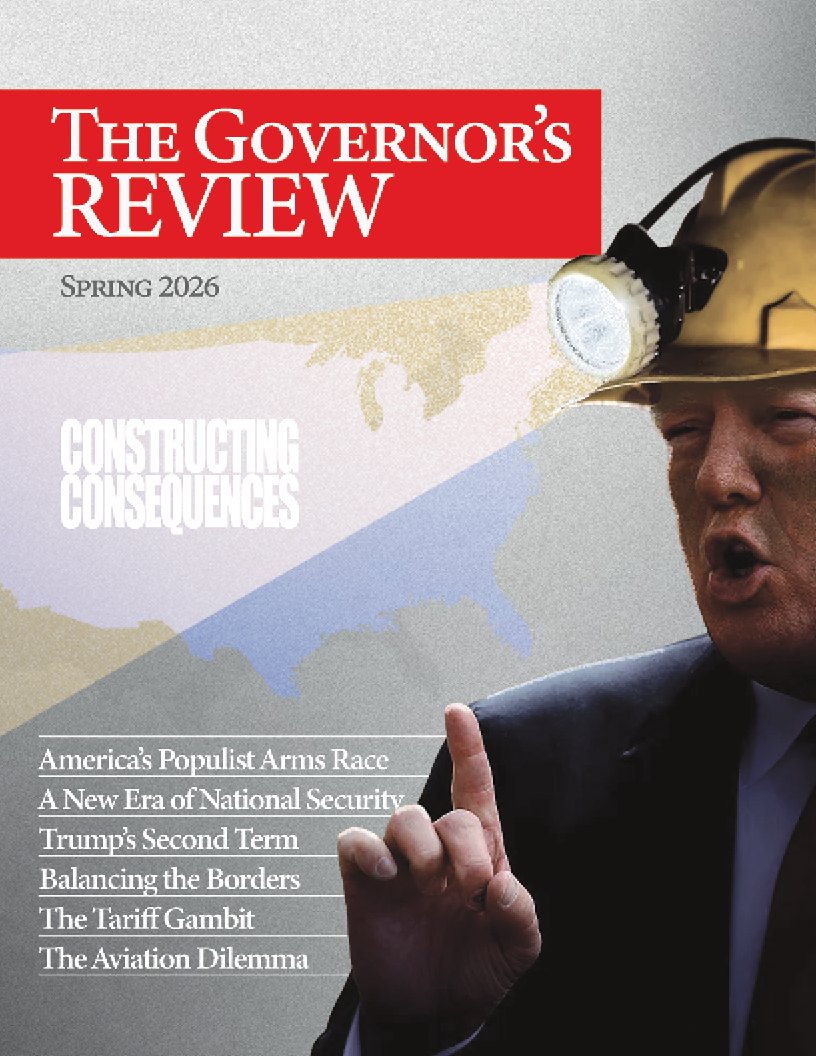
I co-founded The Governor's Review, our school's first political and economic journal, and edit it today. This is my feature from the Spring 2026 issue — turn the pages to read it.

Cover of The Governor’s Review, Spring 2026. Cover lines include “A New Era of National Security.”

Political Economy

A New Era of National Security

The expansion of national security into economic life has kindled a transformation of U.S. governance.

By Bella Duong

For decades, American national security was defined by relatively narrow terms: defending physical borders from military threats and terrorism. Today, that definition has expanded to include domains that would have once been considered purely economic. From artificial intelligence to pharmaceutical supply chains and even the price of consumer goods, the boundary between military defense and domestic economic policy has increasingly faded. Driven by shifting strategic doctrine and reinforced by recent legal developments, the executive branch now routinely uses “national security” to justify intervention in trade, energy, and technology. This expansion of what can be understood as “security inflation” is a transformation in how the U.S. government defines risk, power, and its own role in the economy.

Origins of Expansion

The expansion of national security is the result of a series of overlapping shocks that exposed the fragility of the global economic system. Rising geopolitical competition between the United States and China has reframed economic interdependence as a strategic risk. Technologies such as artificial intelligence became a place of competition. At the same time, the COVID-19 pandemic revealed the extent to which critical supply chains were reduced abroad. Shortages of medical equipment, pharmaceuticals, and basic goods demonstrated that efficiency-driven globalization had created hidden issues. More recently, geopolitical instability has reinforced this perspective. Disruptions to global energy markets and trade routes, including tensions surrounding the Strait of Hormuz, have shown how quickly distant conflicts can turn into domestic economic consequences. Together, these developments have encouraged policymakers to treat economic systems as strategic infrastructures requiring protection and control.

Redefining “National Security”

At the core of this shift is a fundamental redefinition of what counts as a threat. The United States Trade Representative’s (USTR) 2026 Trade Policy Agenda explicitly states that “economic security is national security,” signaling that economic systems are now viewed as integral to the defense strategy. Federal agencies have begun to operationalize this broader definition in concrete ways. The Environmental Protection Agency (EPA) now identifies cyber-attacks on critical infrastructure, artificial intelligence misuse, intellectual property theft, climate disruptions, and pandemics as active national security threats. What links these diverse risks is their potential to disrupt the functioning of the state. In this sense, vulnerability is no longer defined by physical exposure, but by systemic dependence.

This shift is reinforced by broader changes in U.S. strategic thinking. Analyses of recent National Security Strategy (NSS) frameworks by the Center for Strategic and International Studies (CSIS) show a move away from prioritizing global democratic expansion toward a more pragmatic focus on economic and technological dominance. Maintaining leadership in industries such as artificial intelligence, quantum computing, and energy is now treated as a strategic defense asset requiring government oversight.

This represents a historic departure from the late-20th-century consensus of free-market globalization. Rather than assuming that open markets produce stability, policymakers now view reliance on foreign supply chains as a structural vulnerability. The role of the state is shifting accordingly, from facilitating markets to actively shaping them. The question is no longer whether the government should intervene, but where and how.

The Healthcare Paradox

The consequences of this shift become most visible when applied to specific industries. The pharmaceutical supply chain offers a particularly revealing case. Currently, the United States relies heavily on geopolitical rivals, such as China and India for Active Pharmaceutical Ingredients (APIs), the essential components required for most medications. From a traditional economic perspective, this arrangement reflects efficiency: production occurs where it is cheapest. From a security perspective, however, it represents a dangerous dependency. In response, policymakers have proposed tariffs and domestic production mandates to reduce reliance on foreign suppliers. Yet these measures expose a central tension within security-driven policy. While intended to strengthen resilience, they can generate immediate and tangible costs. Tariffs designed to incentivize domestic production increase manufacturing expenses, raising the risk of drug shortages in the short term.

This condition becomes even more noticeable in the application of Section 232 tariffs, which allows the executive branch to restrict imports on national security grounds. When applied to raw materials such as steel, aluminum, and specialized plastics, these tariffs raise the manufacturing cost of producing essential medical equipment, such as hospital beds and syringes. In this way, a policy justified in the name of security can undermine another part of it. If public health is itself a national security concern, then increasing the cost of healthcare infrastructure complicates the very logic used to justify intervention.

Executive Power and Economic Consequences

This expansion of national security into economic policy has also altered the balance of power within the federal government. A recent 2026 Supreme Court decision has granted the executive branch broad discretion in defining what constitutes a national security threat in the context of trade. By limiting judicial oversight, the ruling effectively allows the president to impose tariffs and reshape industrial policy with minimal constraint, so long as these actions are framed in terms of security.

This legal shift amplifies the effects of security inflation. As the definition of security expands, so too does the scope of executive authority. Policies that would traditionally require legislative debate can now be implemented unilaterally, justified by the urgency of national defense.

At the same time, these policies carry broader economic consequences. Efforts to reorganize supply chains around resilience rather than efficiency reflect a global transformation. The Observer Research Foundation describes the transition from “just-in-time” to “just-in-case” production models. While this shift may reduce exposure to external shocks, it also introduces higher costs into the system, contributing to long-term inflationary pressures. In prioritizing security, policymakers are effectively accepting economic trade-offs as a permanent feature of the system rather than a temporary response to the crisis.

Conclusion

The merging of economic policy and national security marks a fundamental transformation in American governance. As the definition of security continues to expand, it becomes an increasingly powerful justification for state intervention across nearly every sector of the economy. However, while the expansion of national security reflects real issues, it also risks normalizing a permanent place of economic intervention justified by crisis. If nearly any policy can be framed as a matter of security, the distinction between necessity and political choice begins to go away. Ultimately, security inflation redefines the boundaries of political authority. In expanding what counts as security, the United States is constructing a new model of governance in which the logic of defense increasingly structures everyday economic life. ■

The Governor’sReview

About the author

Bella Duong co-founded The Governor’s Review, The Governor’s Academy’s first student political and economic journal, in February 2026 and serves as its editor.

Originally published in The Governor’s Review, Spring 2026.

Read the full issue ↗
Cover
In Progress

Publication Roadmap

"Beyond the Screen" is currently being pitched to outlets including the Boston Globe Ideas section, AsAmNews, Vietcetera, Saigoneer, and The 74.

Section Three

Research & Academic

Essays and long-form research — where curiosity meets rigor.

John Locke Institute Essay

My submission to the John Locke Institute's Global Essay Prize — read it below or download the full PDF.

Download the essay ↓

Coming Soon

Junior Thesis — Yellow Journalism

A research thesis on the history and legacy of yellow journalism in American media.

– / – 100%